
Coordinating Gender Based Violence Responses in Gaza

The need for multisectoral services including health services, psychosocial support, safety and livelihood support in Gaza for survivors of Gender-Based Violence (GBV), caregivers, and frontline workers is critical.
In January 2025, UNFPA reached out to its Standby Partners for an expert to coordinate organisations and local responders in GBV prevention and response. Florence had trained with UNFPA in 2018 and worked in South Sudan and Cameroon, as well as deploying through CANADEM for 18 months to UNFPA Yemen, gaining extensive experience in coordinating GBV responses in complex humanitarian settings.
Florence deployed to Gaza as UNFPA GBV Area of Responsibility (AoR) Coordinator from March to June 2025, returning recently to cover a new urgent gap due to the unavoidable absence of the staff member who had replaced her.
“I have come with the commitment to focus on integrating GBV risk mitigation within other sectors and ensure that GBV survivors and people who are the most vulnerable, are at the top of service delivery,” she says.

Through working together, the GBV AoR ensures partners work in harmony without duplication, GBV partners’ capacity is enhanced, GBV prevention and response standards were maintained, and referral pathways are clear. Most partners were national organisations whose staff were themselves affected, and having to move constantly due to the conflict. It became necessary to track partner staff as they also shifted their services with them, including safe spaces for women and girls, psychosocial support, case management and dignity kits.
Given high transportation costs and dangerous travel conditions, Florence provided on-site technical guidance and training to local women led organisations wherever possible, but also adapted case management training to a remote delivery, allowing partners to learn how to support survivors over the phone. She coordinated with other clusters such as shelter, site management, water, sanitation and hygiene and food security —to prioritise GBV survivors and vulnerable populations, and engaged in other partnerships such as working jointly with UNICEF Child Protection staff to train partners assisting child survivors of sexual assault.
Florence worked closely with national and women-led organisations, supporting their dedication to maintaining services despite extremely limited supplies. She advised on establishing age-appropriate survivor groups, integrating psychosocial support with health services, and how to facilitate community-led discussions to ensure their highest needs were heard. With the remote support of UNFPA’s Regional Emergency Gender Advisor, the GBV AoR constantly adapted guidance in Arabic suitable for the rapidly changing context, such as service delivery to people on the move and women with disabilities. While conditions remain difficult and in particular during her first deployment supplies to respond were extremely limited, Florence’s coordination through the GBV AoR means that survivors and the most vulnerable populations in Gaza are at the forefront of assistance.
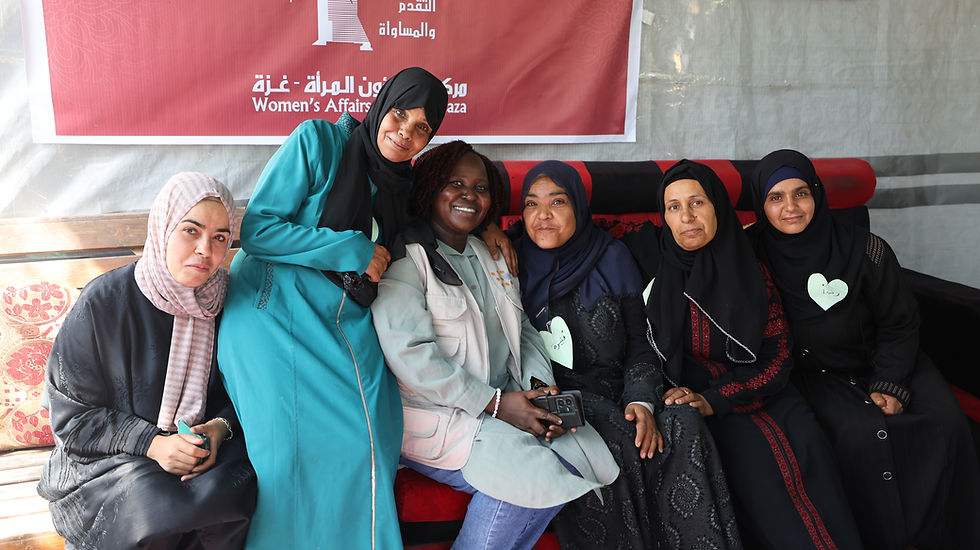
In this, her third deployment, Florence notes that mobilising as a Standby Deployee allows her to choose the work and duration, and to return to her family and her first grandchild in Uganda between missions. Florence’s deployment demonstrates why Standby Deployees are vital: bringing critical expertise, flexibility, and the experience to respond rapidly in complex crises. She feels completely supported by UNFPA, noting that they have fully embraced her and ensured she receives the same care as any other team member. Through her deployments, Florence also appreciates the care and support of her deploying organisation CANADEM. Knowing that she has a deployment officer she considers a friend means that Florence can focus on her life-saving work in an incredibly challenging context, with supportive check ins and a reassuring voice just a phone call away.


Comments